Research data management
The University Library is always happy to assist you with any queries regarding research data management. Our services are constantly evolving. Get an idea of what we currently offer here on this page.
Please feel free to contact us at:
fdm(at)oth-regensburg.de
We are happy to advise and support you on the following topics, amongst others:
- Management of research data in externally funded projects or other research projects
- Drawing up a data management plan
- Answering questions regarding the documentation and storage of data
- Publication and archiving in suitable repositories
- Issuing licences and persistent identifiers
The University Library’s advisory services are supported by other departments at OTH Regensburg, including the Centre for Research and Transfer (ZFT) and the IT Centre.
In close collaboration with the Regensburg Centres, committed academics and representatives of OTH Regensburg, the FDM@OTH working group was established to embed research data management (RDM) at OTH Regensburg.
FDM at OTH Regensburg
-
-
- Information page on RDM topics (ELO)
On our ELO page, you will find specific information on key topics in research data management and a comprehensive overview of the support tools recommended by OTH Regensburg. (in English) - Interactive self-study course (ELO)
Take a look at our self-study course, where you can explore all the key aspects of research data management at your own pace.
- Information page on RDM topics (ELO)
-
- Guidelines on Ensuring Good Scientific Practice and Dealing with Scientific Misconduct at OTH Regensburg
Senate resolution of 18 November 2021. - OTH Regensburg FDM Policy
The University Management of OTH Regensburg adopted an FDM Policy on 20 November 2024. - OTH Regensburg’s FDM Recommendations for Action
Here you will findOTH Regensburg’s recommendations for action on the handling of research data, as mentioned in the policy. For a better understanding, we recommend reading the Practical Guide alongside this document. These recommendations for action are maintained and kept up to date by the FDM@OTH Working Group.
- Guidelines on Ensuring Good Scientific Practice and Dealing with Scientific Misconduct at OTH Regensburg
-
You can find a comprehensive overview of useful FDM tools here.
- FDM package (eLabFTW + Research Storage)
The new FDM package includes the option to apply for access to eLabFTW (electronic lab book) and, optionally, to obtain additional storage space for your research project. The application is submitted via the relevant form on the FDM package page. Detailed information on the services offered is also available on this page. - Research Data Management Organiser (RDMO)
The Research Data Management Organiser (RDMO) is a software tool for creating data management plans. By answering a series of questions, users can manage the research data management of projects and generate documents for funding applications.
OTH Regensburg makes RDMO available to members of the university community. This is made possible by an agreement with Friedrich-Alexander University Erlangen-Nuremberg , which provides a dedicated tenant for OTH Regensburg within its installation as part of a hosting service. - Zenodo
Zenodo is a generic repository provided free of charge by the European Organisation for Nuclear Research (CERN) and is recommended when no suitable subject-specific repository is available. It enables researchers to publish and archive their research results, either openly or with restricted access. Files can be uploaded, described and tagged with metadata. Citation capability is ensured by the assignment of a Digital Object Identifier (DOI).
OTH Regensburg has set up a community on Zenodo and recommends that data sets be uploaded directly to the OTH Regensburg community, in accordance with the Curation Policy. - OTH Regensburg’s OPUS publication server
In OPUS, research data can be published as a supplement to journal articles. Standalone publication is also possible, though only for datasets up to 250 MB in size. The DataCite metadata schema (document type: research data) provides a suitable description format, enabling citations for published research data to be published on OPUS.
- FDM package (eLabFTW + Research Storage)
-
A brief overview of research data management at OTH Regensburg
This information session provides a concise overview of research data management and explains how it is implemented and supported at OTH Regensburg. Participants will receive practical information on data management and the services offered by the university library.
Dates for academic staff:
Thursday, 21 May 2026, 10.30–11.00 am
Wednesday, 24 June 2026, 4.00–4.30 pm
Thursday, 26 November 2026, 2.00–2.30 pm
(Registration)Date for staff:
Friday, 13 November 2026, 9.00–9.30 am (Registration)
General information
-
What are research data?
Research data is generated during the research process and varies depending on the discipline. The German Research Foundation (DFG) offers the following definition:
“Research data form an essential basis for scientific work. The diversity of such data reflects the diversity of different scientific disciplines, research interests and research methods. Research data includes, amongst other things, measurement data, laboratory results, audiovisual information, texts, survey data, objects from collections or samples that are generated, developed or analysed in the course of scientific work. Methodological testing procedures, such as questionnaires, software and simulations, can also constitute key findings of scientific research and should therefore also be included under the term ‘research data’.”
Source: DFG (2015)Guidelines on the Handling of Research Data
Research data management
Research data management involves a structured and standardised approach to handling the data generated during the course of a research project.The research data lifecycle representsthe entire process that the data undergoes, from planning and generation through to publication and re-use. Each phase places different demands on the handling of research data.
The collection of research data is time-consuming and costly. This makes it valuable not only for verifying research findings, but also for re-use in addressing further research questions. The aim is to prevent the loss of knowledge and to produce traceable and sustainable research data in accordancewith the FAIR principles. FAIR stands for Findable, Accessible, Interoperable and Reusable. Data processed in accordance with these principles can be reused for other research questions, increasing the visibility and transparency of data generation and collection, and thereby also enhancing the quality of the research and the institution’s scientific reputation.
-
- Funding: Some funding bodies now require a data management plan at the application stage. This is intended to ensure that the academic community and society as a whole derive the maximum benefit from the public funds allocated and have access to the data and results obtained.
- Integrity: Data management measures contribute to compliancewith the requirements of good scientific practiceand thereby strengthen the credibility of science.
- Visibility: Publishing data can increase the visibility of one’s own research. A meaningful description using metadata and reusable file formats makes it easier to locate and reuse research data.
- Security: The risk of data loss is minimised through careful documentation and systematic data backup and archiving. This ensures the integrity and long-term availability of the data.
- Re-use: Published data can foster the generation of new insights, thereby forming the basis for follow-up research and also sparking collaborations.
-
Research funding bodies, such as the DFG, the BMBF and the EU, are paying increasing attention to research data and have drawn up corresponding guidelines. The requirements vary depending on the funding body, programme line or academic discipline. In some cases, detailed information on how the data will be handled is required at the application stage, or complete data management plans are expected.
German Research Foundation (DFG)
- For DFG projects,the handling of research data andthe objects on which it is based must be carefully planned, documented and described. Furthermore, they should be published as soon as possible, insofar as data protection, copyright and other considerations permit. It is advisable to submit a data management plan. For certain programmes, this is even a requirement.
- A checklist helpsto describe the handling of research data in the DFG project as comprehensively as possible and to explain the framework conditions.
- Costs incurred in preparing and making research data accessible may be applied for and approved as project-specific costs. Source: DFG (as at 24 January 2022):Information on available funding
- In addition, the DFG providessubject-specific guidance onthe handling of research data.
Federal Ministry of Education and Research (BMBF)
- The BMBF hasdrawn up an action planaimed at strengthening data culture in education, science and research and promoting compliance with the FAIR principles in data collection, compilation, use and preservation.
- Specific requirements relating to research data management will be set out in the relevant calls for proposals. These will also specify the extent to which the costs of research data management are eligible for funding.
European Commission / Horizon Europe programme
- In its Horizon Europe programme (2021–2027), the European Commission has stipulated that the preparation of a data management plan is mandatory for all EU projects that generate or reuse data. A brief description of the methodological approach to data handling must be submitted at the time of application.
- A first version of the DMP must be submitted no later than six months after the project has been approved and must be updated regularly thereafter.
- The programme requires the open-access publication of research data and the information necessary for its reuse or validation in a trusted repository (‘as open as possible, as closed as necessary’).
- TheHE Programme Guideexplains the programme’s objectives regarding open and sustainable scientific practices in Chapter 16, ‘Open Science’, and provides recommendations for action.A template for a DMPis provided, and its use is recommended.
- Costs incurred in connection with the open provision of research data and arising during the project period may be claimed as eligible costs.
-
Further information and resources on research data:
- fdm-bayern.org– Networking and exchange platform
- National Research Data Infrastructure (NFDI) e.V.
- Forschungsdaten.info –German-language information portal on research data management (RDM)
- QualidataNet– the network for research data management, data sharing and the secondary use of qualitative research data: support for the preparation, archiving and sharing of qualitative data in social research
- Law & Ethics(Research Data in Education Consortium, VerbundFDB)
- Subject-specific recommendations on the handling of research data(DFG)
-
The data management plan is drawn up during the project’s planning phase and sets out how research data is to be managed during and after the project has been completed. It ensures that researchers address technical, organisational and legal issues as early as possible. As a ‘living document’, it accompanies the various stages of the data lifecycle and is continuously adapted to reflect changes. It sets out which research data will be produced as part of a research project and how this data is to be documented, published and archived. Clarifying these aspects ensures that, in line with good scientific practice, the data is fit for publication and re-use through quality assurance measures, and that legal aspects – such as the handling of personal data or legal obligations restricting publication – have been taken into account.
The structure of the DMP is tailored to the specific characteristics of the discipline. Many German and European funding programmes require comparable detailed information to be provided upon completion of the project. To ensure the plan is well-structured and comprehensive, it is advisable to use templates in the form of questionnaires. The content of these should, as far as possible, be based on the specific requirements of the project.
Free online tools for creating a DMP:
- Research Data Management Organiser (RDMO)
The RDMO was developed as part of a DFG project (2015–2020). It is a software tool that enables researchers to use questionnaires to structure, plan and implement the research data management of their projects across the entire data lifecycle.
As open-source software, the RDMO can be deployed as a local web application and adapted to the specific needs of researchers. This allows different questionnaires to be stored, thereby ensuring that the requirements of funding bodies or subject-specific considerations are taken into account effectively. The RDMO allows the creation of multiple separate projects and enables collaborative work with project partners. Control over the stored data and responses remains with the institution that sets up the software on its own premises. Numerous German institutions use the tool, and a community has formed which, as the RDMO Working Group, has been continuously developing the application since the end of the DFG project. - Argos
Argos is provided by the two European infrastructure organisations, OpenAIRE and EUDAT, as a freely available service for creating data management plans. The application is supplemented by additional services such as the assignment of DOIs and licences and is particularly suitable for applying for EU funding. It is based on the open-source software OpenDMP, which can be reused. - DMPonline
DMPonline is a web-based application that can be used to create data management plans. It is provided by the UK’s Digital Curation Centre (DCC) and is tailored to the UK context. It offers templates from the EU and, in particular, from UK funding bodies, as well as a collection of sample data management plans created using DMPonline. The tool is hosted by the University of Edinburgh on behalf of the DCC. - DMPTool
DMPTool is primarily geared towards funding bodies in the USA and was developed and is hosted by the University of California Digital Curation Centre and the California Digital Library (CDL). It offers templates from US funding bodies and sample data management plans created using the DMPTool.
DMP examples and templates
- Sample data management plans for project applications to various research funding bodies (HU Berlin)
- Data management plans on Zenodo
- DMP Collection Overview (Horizon 2020, University of Vienna)
- Research Data Management Organiser (RDMO)
External Content
External content is loaded to display this content. These sometimes transfer user data to third-party providers or store cookies.
More information and revocation-
The storage and backup of data collected during the project, and where applicable the software applications used, must be adequately planned in order to protect the data from loss due to human or technical error, as well as from tampering and unauthorised access. There are various storage locations and media, such as hard drives, portable storage devices, institutional and external cloud services, which may be available for this purpose and should be assessed for their suitability. Furthermore, regular backups are important, and the backup files should be stored on a different medium and kept separate from the original data. An important preparatory step is to develop a file-naming scheme and create a clear folder structure.
Recommendations and guidance:
- In the case of sensitive and/or personal data, the issue of pseudonymisation or anonymisation must be clarified.
- Furthermore, it is important to secure the files and folders with password protection and, where appropriate, to use access control to assign specific access rights.
- Simply moving data to the Recycle Bin is not sufficient for deletion . To ensure the data is actually destroyed, it must be overwritten or the storage medium destroyed. The Federal Office for Information Security provides guidance on how data can be permanently deleted from hard drives and smartphones.
- The 3-2-1 rule provides helpful guidance for backups. It states that all files should be backed up in triplicate on at least two different media, with one of these copies stored off-site. The backup strategy should also specify which data is to be backed up, how often backups should be carried out, and how long the copies should be retained.
- The DFG’s Guidelines on Good Scientific Practice stipulate that research data must be available in the long term for a period of ten years. To comply with this requirement, it is important to consider the durability of data storage media, choose suitable data formats and provide adequate documentation.
- Cloud services from commercial providers must be critically assessed in terms of data security, data protection, confidentiality and integrity. Institutional cloud services are generally to be preferred.
-
Documentation
A detailed description of research data facilitates its discoverability, enhances its comprehensibility and interpretability, and thereby promotes the reproducibility of research. It is also important for those generating the data to ensure traceability at a later stage. The extent of the documentation may vary depending on the research project. Where possible, standardised and machine-readable metadata schemas should be used, and care must be taken to ensure that the metadata is unambiguously assigned to the object.
Documentation may take the form of structured metadata or an electronic laboratory notebook, but may also be provided as a ReadMe file or a project-internal wiki. Based on the research data lifecycle, the following aspects should be taken into account:
- Information on the research project (project title, project objectives and hypotheses)
- Information on data collection (e.g. purpose of collection, collection method, time period and location of collection, technology/instruments used, data sources)
- Measures for data preparation and analysis (e.g. cleaning, anonymisation/pseudonymisation)
- Structure of the dataset (naming conventions, data versions and changes contained therein)
- Conditions of access
Metadata
Metadata is structured information about data, often referred to as ‘data about data’. It serves to describe resources and fulfils several functions: facilitating the management of objects, ensuring they can be found, providing information about the objects described and ensuring the re-use of the data.
Metadata can be divided into the following categories:
- bibliographic metadata: This includes details such as the title of the data publication, authors, institution, project, year of creation and keywords. It enables data to be cited and makes it easier to locate.
- administrative metadata: This provides information on file types, locations, access rights and licences, and assists with the management and long-term preservation of the data.
- Content-descriptive metadata: This provides information on the content and context of the data and may be structured differently depending on the discipline. For research data, this type of metadata is particularly important for discoverability and traceability. Consequently, various subject-specific metadata standards exist. The Metadata Standards Catalogue (Research Data Alliance) and the ‘Disciplinary Metadata’ overview (Digital Curation Centre) list metadata schemas for data from different academic disciplines.
In the interests of consistency and interoperability, it is recommended to use standardised metadata schemas in which a specific set of descriptive attributes is defined and the individual attributes are clearly specified.
The DataCite metadata schema is a widely used generic standard for describing datasets. It contains mandatory fields (e.g. author and title), recommended fields (e.g. subject area and description) and optional fields (e.g. funding and access rights). A DataCite Best Practice Guide (PDF, GitHub accompanying document) is available as a guide, offering general advice and recommendations on the individual fields. In addition, the DataCite Metadata Generator (GitHub) has been developed as an online tool that provides an input form and links to the explanations in the Best Practice Guide. The result is a DataCite XML file containing the entered data, which can be used to deposit the metadata in a repository. The tool is available on the LMU website, but can also be downloaded from GitHub and opened in a web browser.
-
The research datasets selected for publication can be published as a data supplement to a text-based publication or independently in a data repository .
Data repositories are storage locations for the long-term archiving and, as a rule, publication of digital research data. They can be divided into three categories based on their subject specialisation and their operator. Generic repositories ( e.g. Zenodo), subject-specific repositories and institutional repositories are available , in which datasets, including metadata, can be stored for a certain retention period (usually 10 years). A certified and trustworthy repository is the ideal storage location.
Various search systems assist in finding suitable repositories for the storage and publication of data, and also serve as sources for re-usable datasets:
- Registry of Research Data Repositories (re3data)
re3data is a project funded by the German Research Foundation (DFG) that lists subject-specific repositories for many disciplines worldwide. It uses its own metadata schema to describe the repositories, which allows for a wide range of filtering options, e.g. by subject, content type or country. The use of re3data is recommended by various funding bodies, such as the EU. - Directory of Open Access Repositories (OpenDOAR)
OpenDOAR is a quality-assured global directory listing academic open-access repositories, including those for research data. - RIsource (DFG platform)
With RIsource, the German Research Foundation (DFG) provides an information portal for German research infrastructures to support the planning and implementation of research projects. This includes just under 100 research data repositories.
Before the data is published, all necessary consents regarding the use of third-party materials and information requiring protection must be obtained and documented. Confidential and sensitive data that cannot be made freely available, or that may only be made accessible after a embargo period, must be subject to appropriate access restrictions. In such cases, for example, only the metadata may be made visible to provide information about the data.
Reliable and long-term discoverability and citability of research data are ensured by a persistent identifier (such as the DOI – Digital Object Identifier). Persistent identifiers refer to a digital object itself, meaning they remain valid regardless of changes to the URL. Many repositories offer automatic assignment as a service. The Open Researcher and Contributor ID (ORCID) service provides a unique identifier for academic authors, whilst the Research Organisation Registry (ROR) does the same for institutions. OTH Regensburg is already registered with ROR: https://ror.org/04b9vrm74
Copyright protection for research data often arises only through processes of analysis, classification or organisation (e.g. analysis scripts, descriptive text, models, etc.). Primary data or raw data, such as pure measurement data, do not generally meet the required threshold of originality. By granting licences, the permitted re-use by third parties beyond the scope of copyright can be clearly defined. CC licences constitute usage agreements and are now widely used in the open access sector. The six different licence types cover the most common usage scenarios, enabling rights holders to specify which forms of re-use they permit.
- Registry of Research Data Repositories (re3data)
-
By the end of the research project at the latest, a decision should be made as to which of the data collected should only be retained in the short term (for example, only for the duration of the research project) and for which it makes sense to ensure long-term archiving, so that the data can still be retrieved after the research project has been completed. The DFG Code of Practice for Good Scientific Practice recommends that research data be retained ‘for an appropriate period’, generally ten years. In this context, it is also necessary to determine which data archives or repositories are suitable for the specified type of archiving.
Data relevant to the reproducibility of the research results should be archived on a storage medium that ensures the required retention period, audit trail integrity, identifiability and retrievability. It is also particularly important that file names provide information about the content and are standardised and consistent, and that suitable file formats are used.
Unless open and standardised file formats have already been used, the data should be converted into appropriate formats.
Formats particularly suitable for archiving:
- ‘Office’ documents: PDF/A A (Portable Document Format)
- Text (unstructured): TXT
- Tables (structured text data): csv (Comma Separated Values), tsv (Tab Separated Values)
- Relational databases: SIARD (Software Independent Archival of Relational Databases)
- Graphics: TIFF (Tagged Image File Format)
- Audio files: WAV
- Video files: MPEG-4
- Structured data: XML, JSON
-
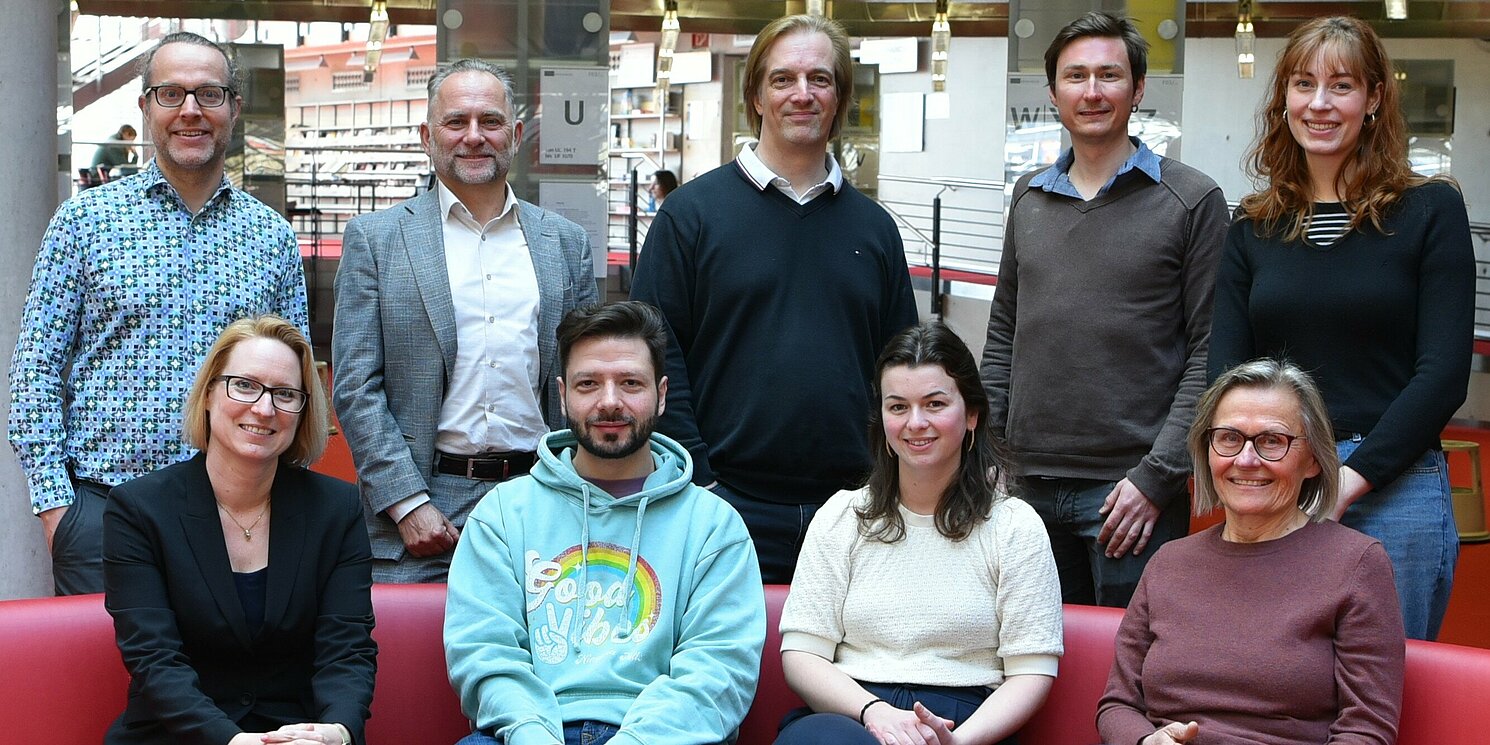
In November 2023, the university’s internal working group FDM@OTH was established. It comprises members of the university management, representatives from research-intensive departments, as well as the university library, the IT Centre and the Centre for Research and Transfer (ZFT).
On behalf of the university management, the working group is working on the design and further development of a centralised and sustainable research data management system that takes into account the needs of researchers and funding bodies and provides the university with centralised infrastructure, workflows and training programmes.
Contact: fdm(at)oth-regensburg.de
Head:
Dr Marcus Graf (ZFT)
Members:
- University Management:
- Prof. Dr Christoph Skornia (Vice-President for IT Security, Digitalisation, Sustainability and Social Responsibility, and STEM Promotion)
- Prof. Dr Oliver Steffens (Vice-President for Research and International Affairs)
- Central Services:
- ZFT: Dr Marcus Graf (Managing Director / Head)
- University Library: Renate Siegmüller (Head), Lilly Zirngibl, Stephanie Mennle
- IT Centre: Dr Christian Broser (Head), Andreas Biersack
- Research Centres: Dr Alexander Leis (Managing Director, RCBE/RCHST), Leonard Klausmann (IT Manager, RCBE/RCHST)
- Professorships:
- Prof. Dr Timo Baumann (Faculty of Computer Science and Mathematics)
- Prof. Dr Elke Nagel (Faculty of Architecture)
- Prof. Dr Sonja Haug (Faculty of Applied Social and Health Sciences) (Working Group member until August 2025)
- University Management:
-
Lilly Zirngibl

Stephanie Mennle You can contact us at the following email address: fdm(at)oth-regensburg.de